The Unexpected Truth About What Makes Content Truly Yours
Most people think the important question about any piece of content these days is whether AI wrote it. Did a real person sit down and draft that article, or did a machine produce it in thirty seconds flat?
I think that question misses the point.
If you are trying to build an information publishing business, you have probably wondered where the line sits between using AI sensibly and quietly handing your work over to it. There is a better question waiting underneath the obvious one. It is not was AI involved. It is what makes content truly yours that matters, and that has nothing to do with how good the tool was.
That is what makes content truly yours, and it has nothing to do with how the first draft got onto the page. Stick with me, because this one shift changes how you should be building your business this month, not once you have everything figured out.
The Question Everyone Is Asking, And Why It Is The Wrong One
Ask ten people in online business forums whether it is acceptable to use AI for content, and you will get ten confident, contradictory answers.
Some will tell you disclosure is everything. Others will tell you nobody cares as long as the result is useful. A few will tell you AI content is a shortcut that will eventually sink your credibility.
All of them are arguing about the wrong line.
The mere presence of AI tells you remarkably little about how much thinking truly went into the finished piece.
Two people can both use the same AI tool for the same task and end up with completely different products. One types a single instruction and publishes whatever comes back. The other spends three days researching, forms a real opinion, tests it, and then asks AI to tidy the sentences. Calling both of those pieces AI-generated tells a reader nothing useful at all.
What Really Travels With Your Content
There is a practical side to this too, worth knowing even if you never think about it again after today. AI tools and platforms are increasingly attaching invisible signals to what they produce. Things like watermarking and provenance data are designed to show where an image, video or piece of writing originated.
Picture a photo generated for a blog post, carrying a hidden marker that says which tool made it and when. Nobody reading the finished article will ever see that marker. It sits underneath the surface, doing nothing to tell the reader whether the photo was chosen well or whether the article around it says anything worth reading.
You do not need to become an expert in any of that. But it is worth knowing it exists, particularly if you ever edit or repurpose AI-assisted material and assume nothing came along for the ride.
None of it changes the real question, though. A file can carry a dozen invisible signals about its origin and still say nothing about whether the finished piece is worth a reader’s time.
The Test Worth Running On Your Own Work
Here is a simpler, more useful test than any label could ever give you. Before you publish anything, ask yourself one question: if I stripped out every sentence AI helped with, what would be left?
If the honest answer is nothing, that is worth noticing. If the answer is your own research or your own opinion, you are in a very different position. The same is true if it is a detail only you would know, or a conclusion you earned the long way round.
I suppose you could say the labels AI-generated and human-written were always a bit too tidy. Most real work sits somewhere in between, and that is fine.
Say two marketers both publish an article about list building. One has personally sent broadcasts to a list for years and knows which subject lines get opened and which get ignored. The other has never sent a single email and is repeating what a tool suggested. Both articles might use identical sentence structure. Only one of them is worth trusting, and the difference has nothing to do with which lines AI wrote.
What matters is whether your fingerprints are truly on the finished thing, not whether a tool touched it along the way.
None of this means the tool is the enemy. It means the tool cannot do the one job that counts: deciding what is true, what matters, and what you are willing to stand behind in your own name.
Building Something Only You Could Have Made
I have written before, in a few other updates I have shared recently, about the problem with chasing hype in this industry. This sits right next to that same problem.
Plenty of beginners worry that using AI tools somehow disqualifies them from building a real business. It does not. What disqualifies you is publishing content that could have come from anyone, about anything, aimed at nobody in particular.
Your own experience is the one thing a tool cannot generate for you. Your customer conversations, if you have had them yet. The mistake you made and would not make again. The question you got asked three times this month. Those things belong to you, and they are what separate a business from a content farm.
None of this requires some dramatic revelation. It can be as plain as explaining, in your own words, why you tried something and what happened next.
If you are a strategy hopper who has jumped from one online idea to the next without ever quite landing, this might be exactly why. Switching subjects before you have anything of your own to say about any of them is exactly why nothing you publish ends up sounding unmistakably yours.
Think of the beginner who published fifteen articles last year across five different topics, each one competent, none of them building on the last. A reader could leave any single piece and learn nothing about who wrote it or why it mattered. That is the strategy-hopper trap, and it has nothing to do with whether AI was involved at any stage.
Where This Leaves You
Use the tools. There is no prize for refusing to. Just make sure that somewhere in every piece of content you publish, there is something that could only have come from you. It should not be something a prompt box anybody else could type the same words into. That one shift, from asking what a tool did to asking what you added, is small to describe and easy to forget once you are back at the keyboard.
If writing is the part of this that holds you back, and getting your own voice onto the page is where you keep getting stuck, One Letter From Retirement is worth a look. It is a course built around writing copy that truly sounds like a person wrote it, rather than a template filled in by anyone. Plenty of people can write a sentence; fewer can write one that only they could have written.
The content that gets remembered was never the content that avoided AI altogether. It was the content nobody else could have written, because nobody else had lived it, tested it, or thought it through the way you did. That, ultimately, is what makes content truly yours.
Best wishes, Dean
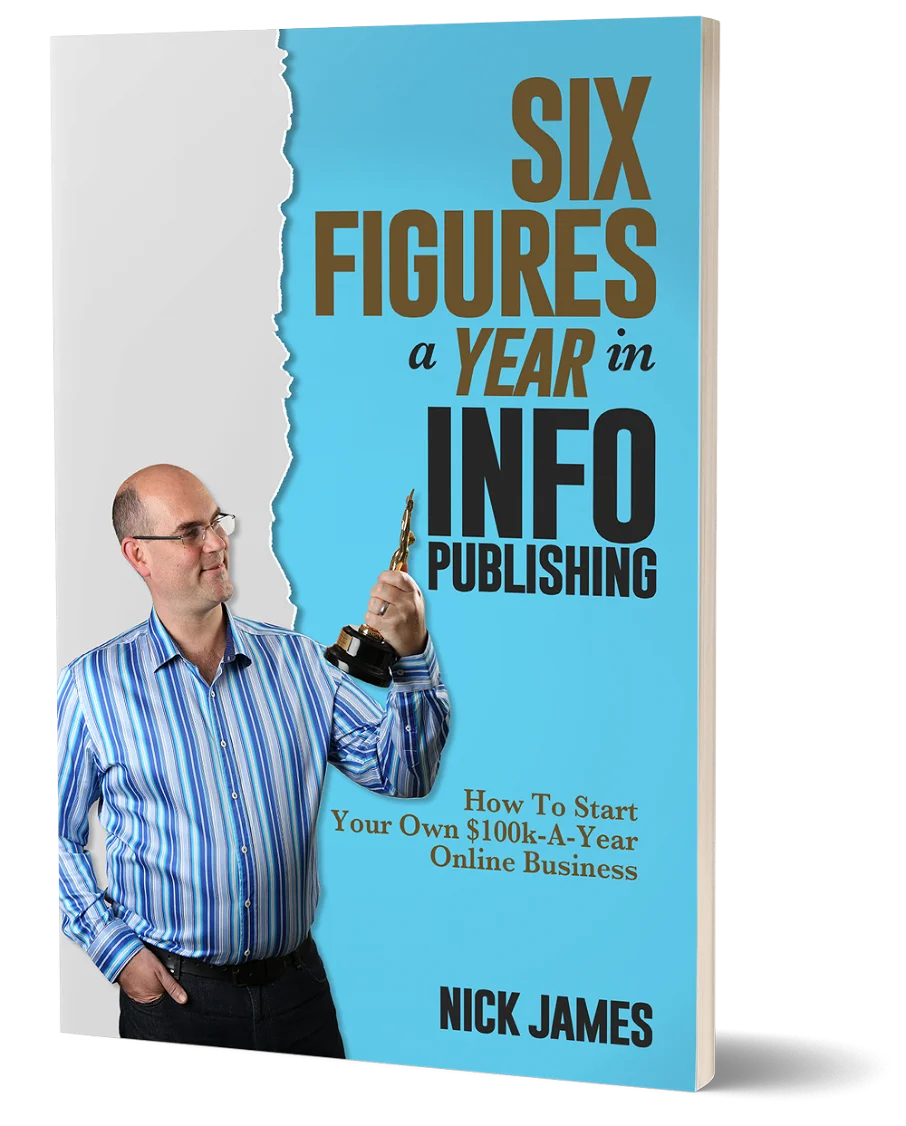
Author offers a FREE copy of this book to his next door neighbor... to prove he's not a drug dealer!
Now claim your FREE COPY.
and follow the step-by-step instructions for making the kind of money (and living the kind of lifestyle) that'll get your neighbors curtains twitching with curiosity!
Enter your details below to discover how to claim your FREE COPY of 'Six Figures A Year In Info Publishing' ...
Privacy Policy : We value your privacy. You can unsubscribe from receiving future emails with 1 click at any time.