Why A Surprising Popup Habit Builds A Stronger Email List
Most people assume a popup is the fastest way to lose a visitor. Close the tab, close the popup, never think about it again. If that is your instinct too, you are not wrong about the popups you have actually seen.
For a long time I believed the same thing. I thought building an audience meant staying quiet and letting the content do the work on its own.
Then I looked at why those popups failed, and it was never the popup itself. It was the timing, and what was being offered, landing on the wrong visitor at the wrong moment.
Email list growth does not have to mean interrupting someone to get a result. Done properly, a popup can feel like the page simply offering the next useful thing, right when a reader is ready for it.
That is the shift worth making, and it costs nothing to try on your own site this week.
Why One Bad Popup Ruins The Idea For Everyone
Nobody dislikes popups in general. They dislike the ones that will not close, the ones that spawn a second window the moment the first disappears, and the ones with a tiny X tucked in a corner you need two tries to tap.
Picture landing on a page and getting a popup that blocks the whole screen, with no way to tell where the X is hiding, while a second window tries to open behind it. That is the experience most people are reacting against when they say they hate popups, not the idea of a popup itself. A popup that closes in one tap and never tries that trick again does not carry the same reputation, even though it is still, technically, a popup.
Those popups earned the reputation. A different kind of popup never gets blamed for any of it, because it behaves differently from the start.
The rule that separates the two is simple. It should close in one obvious click, every time, with nothing hiding behind it.
Once the exit is easy, what is left is simply an offer, not an ambush.
That one change removes most of what people actually object to. What remains is a question of what you offer, and when you offer it.
Match The Offer To What They Are Already Reading
A generic popup offering “join our newsletter” treats every visitor the same, whether they just landed or have read three paragraphs already. Neither one feels seen, and neither tends to click.
Tie the offer to the page itself and the whole thing changes. Someone reading about pricing should see something about pricing. Someone reading about building a list should see something that helps them do exactly that.
Think of a page explaining how to write a subject line. A popup there offering a short checklist on subject lines fits what the reader is already doing. A popup pushing something unrelated, like a generic ebook on starting a business, breaks the moment instead of extending it. The closer the offer sits to the sentence the reader just finished, the more natural the next step feels, and that closeness is where real email list growth tends to come from.
The popup becomes a continuation of what the reader was already interested in, rather than a detour away from it.
I learned this the expensive way, and it is worth telling honestly rather than tidying it up.
What The Solo Ads Taught Me About Buying Attention
Early in this business I bought solo ads to build my list quickly. Most of the people who signed up never opened a single email I sent, and I spent somewhere between $2,700 and $3,000 finding that out.
Buying a stranger’s attention does not mean you have earned it. I had names on a list, but nothing resembling a relationship behind them, and the emails I sent went nowhere. Your own numbers, if you tried something similar, could look completely different, since spend and results vary from one list to the next.
A popup aimed at your own visitor works the opposite way. That person is already reading something you wrote, already interested enough to stay on the page, which is a different starting point entirely from a cold click bought from someone else’s list.
That is what pushed me to stop buying traffic and build things properly instead, starting with the people already on my own pages rather than strangers somewhere else. These days the popups I run are tied to specific pages rather than sent out broadly to buy random traffic, and that single change has done more for genuine email list growth than any amount of money spent chasing cold clicks ever did.
Timing Decides Almost As Much As The Words Do
A popup that fires the second someone lands on a page interrupts before they have read a sentence. Most visitors close it on reflex without even seeing what it says.
Give the reader a little room first. A short delay lets them settle into the page before you ask for anything. An exit popup, shown only once someone is already leaving, keeps a sales page focused on the sale, then offers a second, gentler door on the way out.
Somewhere between too soon and too late sits the moment a reader is genuinely ready. A popup built around that moment earns a click. One that ignores it earns a closed tab.
A reader who has only just arrived has nothing yet to judge whether your newsletter is useful. A reader who has read half the page has already decided you know something worth hearing, which is exactly the point to ask for an email address.
I write about small habits like this one regularly, and more of them sit in other articles I have shared recently if this kind of detail is useful to you.
A Smaller List That Opens Beats A Bigger One That Does Not
A popup shown to every visitor, offering the same generic thing, will add names to your list. Some of those names never open a single email. They joined out of habit, or to make a window disappear.
A popup matched to the page someone is already reading adds fewer names some weeks. It also adds people who already know, roughly, what they just agreed to receive.
Picture two versions of the same site. One shows a single popup to everyone, worded the same no matter which page they are on, and ends the month with three hundred new names. The other matches each popup to its page and ends the month with one hundred and eighty. Six months later the second list is still opening its emails in meaningful numbers, while most of the first list has gone quiet. That gap is what steady email list growth actually looks like once you stop counting only the sign-up number.
That difference shows up later, in how many emails actually get opened, not in how fast the list grows on day one.
A smaller list built properly, the same way you would get the foundations right on any job, will usually outlast a bigger one built in a hurry.
Something Worth Testing On One Page This Week
You do not need to rebuild your whole site to try this. Pick one page, the one that already gets a reasonable amount of traffic.
Add a popup that waits a little before it appears. Match whatever it offers to the subject of that exact page. Make sure it closes in a single click if today is not the day for that reader.
Then watch what happens over the following weeks, not just the first day.
Small, honest changes like this tend to compound quietly, which has been true of most things worth doing properly in this business.
If I am honest, I still think the popups I used to close without reading were a fair reason to distrust the whole idea. The ones built around timing and relevance are simply a different thing altogether, and worth a proper try before writing the idea off for good.
Best wishes, Dean
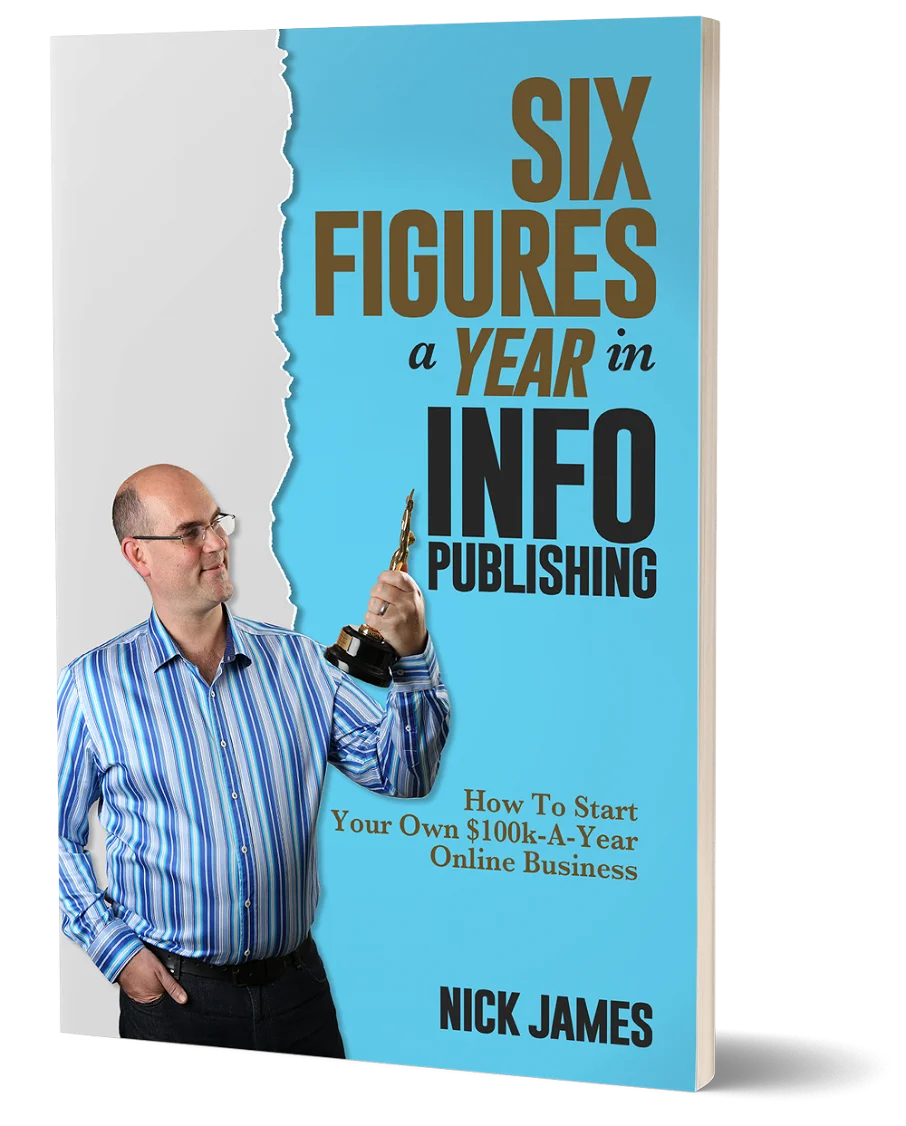
Author offers a FREE copy of this book to his next door neighbor... to prove he's not a drug dealer!
Now claim your FREE COPY.
and follow the step-by-step instructions for making the kind of money (and living the kind of lifestyle) that'll get your neighbors curtains twitching with curiosity!
Enter your details below to discover how to claim your FREE COPY of 'Six Figures A Year In Info Publishing' ...
Privacy Policy : We value your privacy. You can unsubscribe from receiving future emails with 1 click at any time.