The Real Reason Identical Licensed Products Get Different Results
If you have ever bought the rights to sell someone else’s licensed product, you already know the strange feeling that comes right after. You own it.
You are allowed to sell it under your own name. And somewhere out there, plenty of other people bought that exact same file, on the exact same day, for the exact same fee.
That is where the doubt creeps in, especially if you are still finding your feet with this. You have maybe jumped from one idea to the next before, hoping this one would finally be the approach that stuck.
You buy the licence expecting it to be the hard part solved. Then you open the file and it reads exactly like every other page selling the same thing.
Here is what nobody quite tells you before that first purchase. Owning the rights was never what decided whether it sold. What you do with it afterwards decides that, and that part takes a good deal less time than most people fear.
Why Identical Products Rarely Sell The Same Way
A licence gives you legal permission to sell something. It does not give a buyer any reason to choose your copy over the next one.
Depending on how it was sold, dozens or even hundreds of other people may hold the exact same rights you do. That is not a flaw in the model, if I’m honest. It is simply the trade you make for skipping months of writing and testing a product from nothing.
But it does mean something worth sitting with. If you sell a licensed product exactly as it arrived, you are quietly asking a stranger to pick you out of a crowd of identical sellers.
Some will. Most will not, because you have given them no reason to.
Picture two people selling the identical guide to email marketing. One leaves the title, the cover and the opening page exactly as they arrived.
The other spends an afternoon making it sound like it was written for a specific reader, with a specific problem, in a specific voice. The second has already made the sale before the reader compares anything.
Owning the rights was never what decided whether it sold.
I suppose you could say a licence is the frame, not the finished piece. What happens to it after you own it is what a buyer is really paying for.
Fixing The Underlying Problem, Not Just Covering It Up
I spent years restoring old sash windows before I ever touched information publishing. The same rule applied there as it does with a licensed product.
You could paint over rotten wood and it would look fine for a season. Or you could get the foundations right, use the correct tools, and properly fix what was wrong underneath.
One lasted.
One didn’t.
A licensed product left exactly as it was received is the painted-over version. It looks finished. It isn’t, not to the reader standing in front of it deciding whether to trust you with their money.
The fix does not need a rebuild from scratch. It asks for a few smaller, honest changes, each one small enough to finish in an afternoon.
Say the product covers list-building. Left untouched, it reads the same as every other list-building guide sold under the same licence.
Add one paragraph on the mistake you see beginners make with their first opt-in page. It stops reading like a stranger’s file and starts reading like something written for the person in front of you.
Make It Unmistakably Yours Before Anyone Sees It
Start with the obvious part. Most licences let you put your own name on the product as author or publisher, sometimes without changing a single word underneath.
Always check your specific agreement first. Some ask for a set amount of the content to change before you can properly claim it as your own.
Then look hard at the title. A flat, generic title holds a useful product back more often than the content inside it ever does.
Something like Weight Loss Tips tells a reader nothing. Something like The 12-Minute Morning Routine That Beats A Slow Metabolism tells them exactly why they should keep reading.
The content underneath might be identical either way.
A stronger title leads with the clearest benefit and leaves the reader wanting to know more. A cover and a page redesigned to match your own site takes an afternoon, not a week.
It is usually the first thing anyone notices, long before they read a word of what you are offering.
Aim It At One Reader Instead Of Everyone
Most licensed content is written broadly on purpose, because whoever sold the licence needs it to fit hundreds of different buyers across different markets. That broad approach is exactly what leaves room for you.
Take the same material and point it at one specific reader. Swap the examples. Adjust the references.
Change how you introduce the material so it sounds like it was written for the exact person reading it. In a sense, by the time you have finished, it was.
You can find more on choosing the right reader before you buy anything at all, in other articles I have shared recently. It makes this step almost automatic once you have done it once.
Add The One Thing Only You Can Add
The last piece is the smallest, and it is the one most people skip. Add something that could only have come from you: a short honest paragraph on why you chose this particular product.
Or a quick example from your own experience, or a simple bonus checklist built from the main content.
Think about the last time you paid full price for something instead of shopping around for the cheapest version. You were not buying the item itself. You were buying the person who sold it to you and the way they explained it.
That is the small extra reason you trusted them over the seller two tabs along.
A licensed product works the same way once you add your own paragraph to it. The words underneath might be identical to a hundred other copies.
That one paragraph is not, and it is usually the part a reader remembers.
That one sentence does not need to be dramatic. It might be as simple as saying why you picked this particular product over the dozen alternatives.
Or naming the one problem inside it you already understood before you read a page. A reader who feels spoken to directly forgives almost everything else about a page that looks familiar.
That is worth sitting with if you are still deciding how narrow to go with your own version. A product built for one clear reader, backed by one honest sentence, tends to outsell a broad one aimed at nobody.
What A Single Afternoon Buys You
None of this asks for a rewrite. A new title. A handful of changes aimed at one reader.
One true paragraph only you could have written. Most people finish all three in a single afternoon.
That afternoon is the difference between a licence sitting unsold next to a hundred identical copies, and one that kept going. Sale after sale continued long after the excitement of buying it had worn off.
Skip it, and you are competing on price alone against everyone else holding the same rights. Spend the afternoon, and your buyer finally has a reason to choose you over anyone else holding the exact same certificate.
If you are sitting on a licence you haven’t touched yet, that is where I would start. Your name, one clear reader, and a single honest sentence in your own words.
Best wishes, Dean
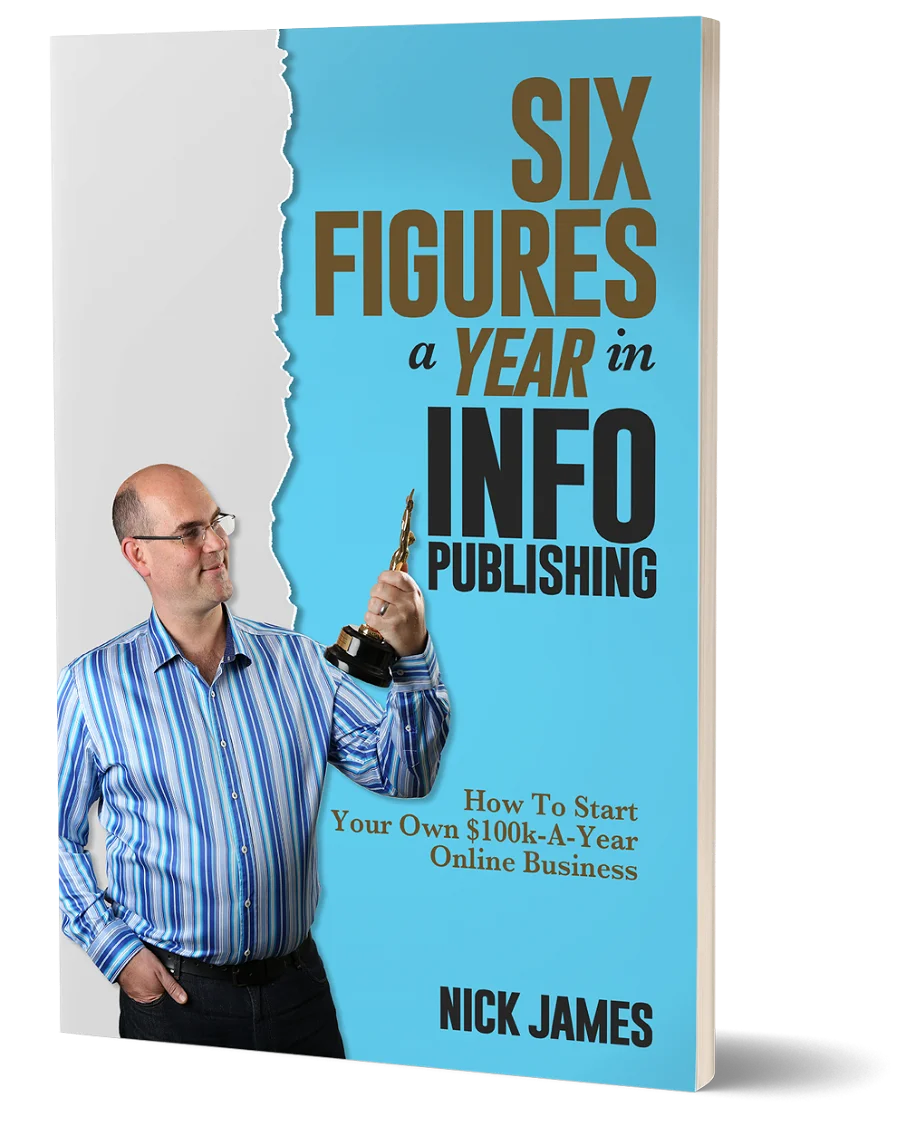
Author offers a FREE copy of this book to his next door neighbor... to prove he's not a drug dealer!
Now claim your FREE COPY.
and follow the step-by-step instructions for making the kind of money (and living the kind of lifestyle) that'll get your neighbors curtains twitching with curiosity!
Enter your details below to discover how to claim your FREE COPY of 'Six Figures A Year In Info Publishing' ...
Privacy Policy : We value your privacy. You can unsubscribe from receiving future emails with 1 click at any time.