How to Get Real Value From Existing Content
I used to sit at my kitchen table on a Sunday evening with the laptop open and absolutely nothing to say. Two years into this business, and some weeks that feeling still turns up. It is the pressure to produce something new, again, when I already have more material sitting unused than I know what to do with.
If that sounds familiar, here is the thing I wish somebody had told me earlier. You do not need new ideas nearly as often as you think you do. What you need is to get proper value out of your existing content before you sit down to write anything else.
That one shift has changed how I work more than any tool I have bought.
The Habit I Brought With Me From The Trade
When I was restoring sash windows, you never threw away a good piece of timber because you had already used it once. You planed it down, you reused what was sound, and you only reached for new material when the old stuff genuinely would not do the job any more.
Most people starting out in information publishing do the opposite with their existing content. They write one article, publish it, and move straight on to inventing the next one from nothing.
I did that for the first year of this business. It is a slow way to burn yourself out.
Where Your Best Material Is Already Sitting
Have a look back through what you have already published. Somewhere in there is a piece that took real effort: a longer article, a detailed email, something you researched properly rather than rushed.
That piece is not finished earning its keep. It is a source, not a one-off.
You do not need new ideas nearly as often as you think you do.
I had never really thought about my own writing this way until I started paying attention to what I had already shared. I still cover this sort of thing regularly. If you want to see how the thinking develops, other articles I have shared recently go into it a bit further.
Mine It Rather Than Repeat It
The mistake is asking, how do I turn this into something else. That question just gets you a slightly reworded version of the same thing.
The better question is, what separate, useful ideas are hiding inside this piece.
A good long article usually has several of them buried in it. A statistic you mentioned in passing. One example you only gave a sentence to. A mistake you flagged and never fully explained. Each of those can become its own thing.
I went back through one of my own longer pieces a while ago and found four separate points I had rushed past. Each one was worth its own email on its own. I had been sitting on four pieces of content and thought I only had one.
Match The Idea To The Right Format
Once you have pulled the separate ideas out, do not just publish them all the same way you published the original. A short, sharp point works better as a quick email than as another long article nobody has time to read.
A step you glossed over first time round might deserve a proper walkthrough of its own. A strong opinion you stated once might work better as a short, direct post that gives people something to agree or disagree with.
Fit the idea to the format. Do not force the format to fit the idea, purely because it is the one you already know how to write.
The Bit Nobody Mentions: Ask What You Missed
There is one more step worth doing, and it is the one I nearly always skip if I am honest. Go back to that original piece one more time and ask yourself what you never quite said.
Sometimes there is a follow-up question sitting right there that you never answered. Sometimes there is an implication in something you wrote that deserves a whole separate piece to itself.
I keep going back to old drafts for exactly this reason. There is usually something left in them I did not notice the first time round.
Fewer New Foundations, Better Ones
None of this means you never write anything new again. It means you stop treating every piece of content as disposable. Instead, start treating your best work the way I used to treat a sound piece of timber: worth getting more than one use out of.
I run the email side of my own business through eShowcase. That is where a lot of this gets put into practice once the writing is done. If you have not looked at how a proper setup handles this sort of thing, eShowcase is worth a look.
Start with one piece of your existing content this week. Not a new one. Go back to something you have already written, and ask what is still hiding inside it that you have not used yet.
You will probably find more than you expect.
If You Want To Take This Further
Everything above works whether you are writing your own material from scratch or working with content you already have the rights to use. Nick James put together something called Product Licensing Formula that goes into a related idea in a lot more depth. It covers getting proper, ongoing value out of a piece of content or a licensed product, rather than using it once and moving on.
It is not something I have personally been through, so I will not pretend otherwise. But if getting more out of what you already have is the piece you are missing, it is a sensible next place to look.
I suppose you could say the whole point of this business is making the effort you have already put in work harder for you. Rather than constantly starting again from nothing, get the foundations right once, and you will be surprised how far they carry you.
Best wishes, Dean
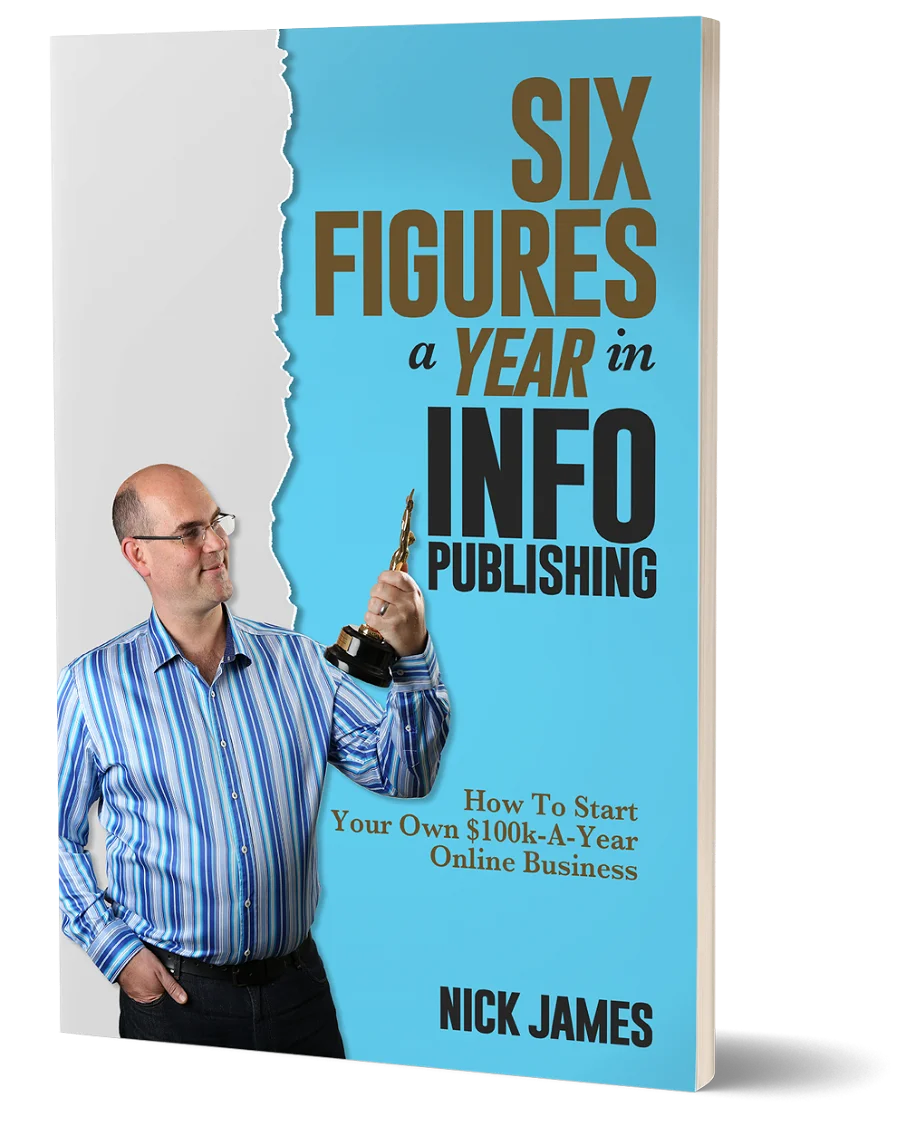
Author offers a FREE copy of this book to his next door neighbor... to prove he's not a drug dealer!
Now claim your FREE COPY.
and follow the step-by-step instructions for making the kind of money (and living the kind of lifestyle) that'll get your neighbors curtains twitching with curiosity!
Enter your details below to discover how to claim your FREE COPY of 'Six Figures A Year In Info Publishing' ...
Privacy Policy : We value your privacy. You can unsubscribe from receiving future emails with 1 click at any time.