How To Reveal The Clear Proof That Earns Trust Fast
Most people starting an online business assume they need years behind them before anyone takes them seriously. A website running since 2019. A client list. An about page thick with credentials they don’t have yet.
If I’m honest, I didn’t have any of that either, not when I started just over two years ago. I’d spent decades restoring sash windows with my own hands, not writing marketing emails. Nobody on my list had the faintest idea who I was.
What changed how people read my work wasn’t time passing. It was one specific, checkable thing I could point to. That’s really the whole trick behind learning to earn trust fast, even with no track record at all.
That’s the part worth understanding if you’re newer to this than you’d like to admit. You don’t earn trust by waiting long enough. You earn it by showing something real and small, long before you’ve got a history to lean on.
Why A Stranger Decides Before They’ve Even Read Your Offer
Nobody arrives at your page neutral. They’ve been trained since childhood to trust the person who seems to know more than they do, whether that’s a parent, a teacher, or someone online explaining a problem they’re stuck on.
That habit doesn’t disappear once you’re an adult reading a stranger’s website. It just points at whoever looks like they know this subject.
Checking every claim yourself takes hours. Trusting someone who already checked takes seconds. Most readers reach for that shortcut without even noticing they’ve done it.
So before anyone buys anything from you, there’s a quieter question sitting underneath it: does this person actually know what they’re talking about? When the answer feels shaky, nothing else in your marketing gets a fair hearing.
The Proof That Works When You Have Nothing Else
A long track record is one way to answer that question. It’s also the slowest, and it isn’t available to a beginner, by definition.
What is available, from day one, is something smaller and more honest: a specific result, even a tiny one. A process you’re willing to show rather than just describe. A plain admission of where your experience runs out.
None of those three things need decades behind them. They need detail. This is how you earn trust when you have nothing else to show.
“I helped one subscriber fix this exact problem last week” beats “I’ve helped many people” every single time, because a stranger can picture the first one and can’t picture the second.
I’ve gone into related ideas in other articles I’ve shared recently, but this is the one point I’d put ahead of all of them: specific beats vague, even at a tiny scale.
Years restoring sash windows taught me the same lesson long before I ever touched a keyboard. Nobody trusted a quote because I sounded confident reading it out. They trusted it once they’d seen the actual work, close up, done properly, with the right tools used for the right job.
What Building FAQ Marketing Logic Taught Me About Proof
I’ve been running a separate site called FAQ Marketing Logic for a while now, and it’s taught me something about proof that applies just as much to earning trust with an audience as it does to building a website.
Instead of publishing whatever idea occurred to me that week, I organised the whole thing around six connected topics, following the rough order of building and growing an online business. Every article was meant to support the ones around it, not just add to a pile.
It took a long while before anything happened. Then, by September, Google Search Console was showing 78 of the site’s pages appearing in search, with impressions past 4,000 over the previous three months. Around the same time, I spotted something I was genuinely pleased about: Google’s AI Overview had used one of the site’s articles as a source for a question about turning a skill into a sellable offer.
It’s still early days, and I wouldn’t call it a proven formula or a high-traffic site. But that one specific, checkable detail did more for how people treat my opinion on structured content than any amount of simply saying I knew what I was doing ever could.
The same thing applies to whatever you’re building a reputation around right now. One documented, specific result, even a small one, carries further with a stranger than a confident claim with nothing underneath it.
A reader doesn’t need your whole history. They need one detail too specific to fake.
Four Places Your Own Proof Is Probably Already Sitting
One Small, Specific Result
Think of the last time you actually helped someone, even in a small way. Not “I’ve helped lots of people with this,” but the one name, the one message, the one exact problem it solved. Write that down, in that much detail, and use it before you use anything vague.
A Process You Can Show, Not Just Tell
Walk a reader through how you actually work something out, one step at a time, rather than only handing them the finished answer. Watching someone think builds more trust than watching them conclude.
One Honest Limit
Say plainly where your experience is thin. This feels risky to a beginner. It shouldn’t. Pretending to know everything reads as performance. Admitting where you don’t is one of the fastest ways to sound like someone actually telling the truth.
Something Specific From Your Own Trade
Whatever you did before this, there’s detail sitting in it nobody else can borrow. Mine happens to be building things properly, getting the foundations right, and fixing the underlying problem instead of covering it over. Yours will be different, but it’s there, and it’s yours.
Where To Put It, And Why That Part Matters
Don’t save this for an about page. Most readers never click it.
Put your first piece of specific proof inside whatever you’re already writing. A result belongs in your opening lines. A documented step belongs inside the teaching itself. An honest limit belongs near the end, not hidden somewhere nobody looks.
Let it do quiet work while the reader is busy learning something useful from you. That earns far more than a paragraph announcing your credentials before you’ve earned a moment of their attention.
Read your own next piece back afterwards. If a stranger couldn’t point to one specific, checkable detail in it, the proof is still missing, not just a bit weak.
You’re not short of material for this. You’re short of the habit of writing it down plainly instead of smoothing it into something vaguer and safer. Fix that one habit, and you’ll earn trust long before you’ve got years behind you.
Best wishes, Dean
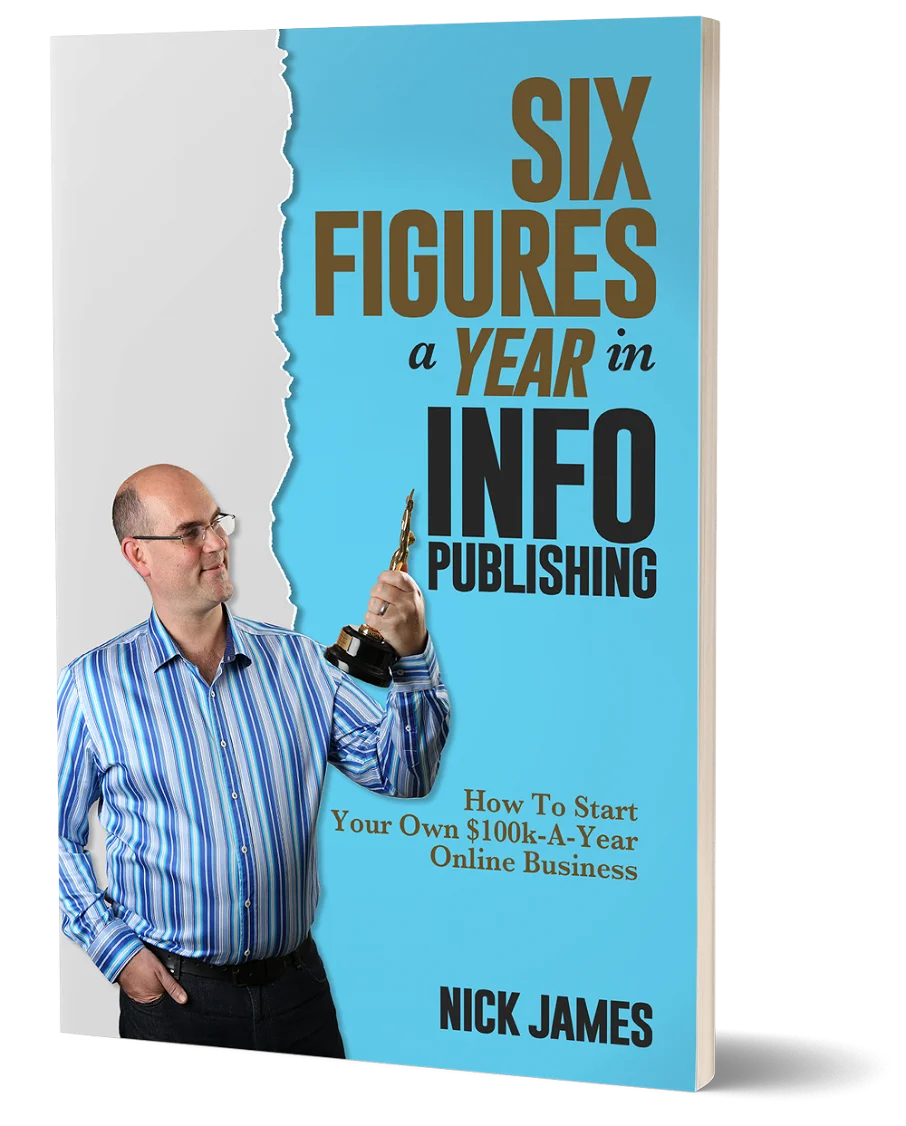
Author offers a FREE copy of this book to his next door neighbor... to prove he's not a drug dealer!
Now claim your FREE COPY.
and follow the step-by-step instructions for making the kind of money (and living the kind of lifestyle) that'll get your neighbors curtains twitching with curiosity!
Enter your details below to discover how to claim your FREE COPY of 'Six Figures A Year In Info Publishing' ...
Privacy Policy : We value your privacy. You can unsubscribe from receiving future emails with 1 click at any time.