What’s The Secret AI Can Never Write Into Your Content?
You already know the feeling. You open an AI tool, type in a topic, and watch a full article appear on the screen in under a minute.
It reads fine. It sounds sensible. And it could just as easily have been written for somebody else’s business as yours.
That is the real problem with a lot of AI-written content right now. It gets the words right and misses the one thing your readers came here for: you.
If you are trying to build an audience from nothing, especially when everything about online business already feels like too many choices at once, that distinction matters more than it looks like it should. Anyone can generate content. Very few people can write something a stranger reads and thinks, this person knows what they’re talking about.
That difference is not about talent, and it is not about avoiding AI altogether. It is about understanding exactly what a machine can hand you, and what only you can add. That gap shows up fastest with beginners, who already feel like they are choosing between a dozen different paths before they have written a single word.
Why AI-Written Content Doesn’t Tell You Very Much
There is a lot of talk at the moment about labelling AI content, tracking where it came from, and knowing when a machine was involved. Some of that matters for obvious reasons. Photos, video and audio are getting harder to trust at face value.
But for someone writing blog posts, emails or social content, the more useful question is not was AI involved? It is what did I bring to this?
Two people can type the exact same prompt into the exact same tool. One copies what comes out and hits publish. The other uses it as a starting point, adds a real example, tightens the argument, and writes the ending in their own words.
Both used AI. Only one of them wrote something worth a reader’s time.
What Nobody Tells You About The Part That Matters Most
I suppose you could say the internet has more content in it right now than any one person could read in ten lifetimes. AI has made that worse, not better.
It is easy to produce another “ten tips” article. It is much harder to produce one only you could have written.
Anyone can generate content. Very few people can write something a stranger reads and thinks, this person knows what they’re talking about.
That is the part that matters most, and it is also the part a machine cannot do for you. It cannot have run your own experiment, made your own mistake, or sat with your own customer’s question. It can only work with what you give it.
Give it nothing real, and nothing real comes back out.
What Survived When My Old Business Didn’t
I spent years building a sash window restoration business with my hands and my reputation. Then a run of back and neck surgeries in 2018 ended it. There were low points, including six months in a wheelchair after an infection took the feeling from my chest down.
There were stretches where I questioned whether it was worth carrying on. My wife Linda stayed with me through every bit of it, and I can walk now, with a frame.
Here is the part that connects to all this. What I had left afterwards was not a skill for cutting a joint or matching an old timber profile. That skill was gone along with the trade.
What survived was everything in my head: decades of cold calling, direct response marketing, and running a business day to day. It included understanding what a customer needed rather than what they said they wanted.
That is the part no tool could ever have replaced for me, and it is exactly the part AI cannot replace for you either. It can write you a sentence. It cannot hand you the years behind it.
Building It Properly, Even When The Tool Is Doing The Typing
If you have spent any time on a building site, you learn something fairly quickly. Getting the foundations right matters more than anything you put on top of them, and using the right tool for the job never means skipping the actual work.
A builder who skips levelling the foundation can still put up a wall that looks straight for a while. It rarely stays that way.
Writing with AI carries the same risk. A paragraph can read smoothly and still say nothing true about you or your reader, and that catches up with it just as surely.
Writing with AI works the same way. The tool can save you time on the typing.
It cannot decide what is worth saying, and it cannot know your reader the way you do. That comes from the questions they ask and the mistakes you have watched them make.
That is why AI-written content so often reads fine but lands flat. Say you are drafting an email about a tool you use every day.
AI can get the structure right and the grammar tidy in seconds. What it cannot do is remember the specific question a reader asked you last week that this email happens to answer. That detail is what makes a stranger stop scrolling and read the whole thing.
I have written about this kind of thing before, and I keep coming back to the same conclusion. You will find it running through other articles I have shared recently. The tools change constantly, but the person using them properly is still the one who gets trusted.
That is worth sitting with for a second, because it changes what you should be doing with your time. Less time perfecting the prompt. More time fixing the actual problem your reader came to you with.
A Simple Way To Check Your Own Content
Before you publish anything an AI tool helped you write, ask one plain question. Could a stranger tell, from reading this, that a real person with real experience was behind it?
If the honest answer is no, it usually means one thing is missing. Not better wording. A real example, a real opinion, or a real detail only you could have added.
Say your draft claims a method saves time. A real detail might be the exact task it replaced, and how long that used to take you before you found a better way. That single line turns a general claim into something a reader can picture themselves doing.
Add that one thing back in before you publish. It rarely takes long, and it is almost always the difference between content that gets skimmed once and content that gets a reply.
You do not need to reject AI to do this well. You need to be the part of the process it cannot fake.
The Part Worth Remembering
Nobody is going to subscribe to your emails because you found a clever prompt.
They will subscribe because something you wrote made them feel understood, and kept doing that often enough that they started looking for the next one.
The truth about AI-written content is that it can help you say it faster. It cannot decide what is worth saying in the first place. That part has always been, and still is, entirely up to you.
If I’m honest, that is the one thing about this business the surgeries never took away from me. It is not going anywhere now either.
Best wishes, Dean
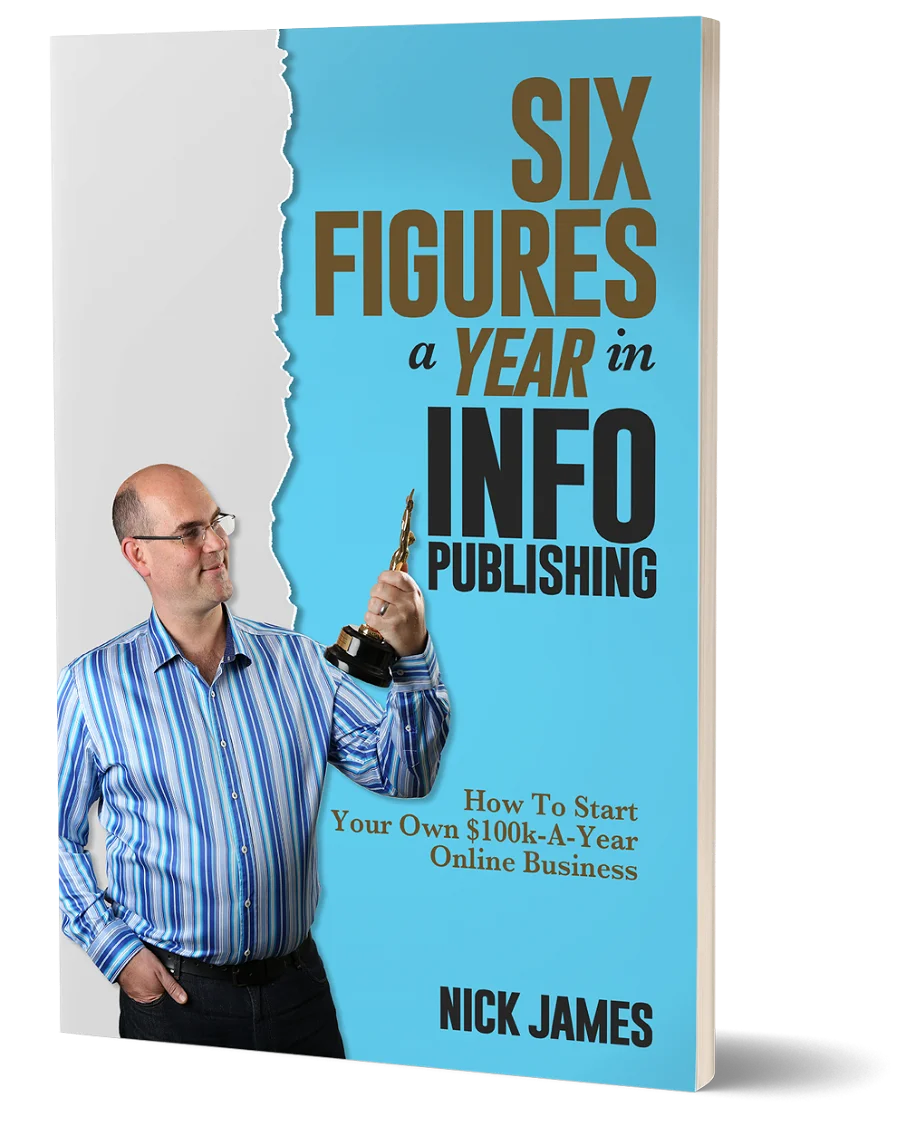
Author offers a FREE copy of this book to his next door neighbor... to prove he's not a drug dealer!
Now claim your FREE COPY.
and follow the step-by-step instructions for making the kind of money (and living the kind of lifestyle) that'll get your neighbors curtains twitching with curiosity!
Enter your details below to discover how to claim your FREE COPY of 'Six Figures A Year In Info Publishing' ...
Privacy Policy : We value your privacy. You can unsubscribe from receiving future emails with 1 click at any time.