How To Master The Big Project You Feel Stuck On
I keep noticing the same thing when I look at the questions beginners ask about starting an online business. It is rarely that they cannot start. It is that they cannot finish.
Someone gets two thirds through building a course, or thirty pages into a guide, and then a different opportunity comes along looking shinier. The first thing gets quietly parked. Dean’s own audience research turned up a name for this: “Strategy Hoppers,” people who jump from one idea to the next without ever landing on one long enough to see it through.
If I’m honest, the idea is almost never the problem. Nobody ever taught most of us how to finish a big project once it stops feeling new. If you have got something sitting at eighty percent done right now, taking up space in your head every time you open the folder, this one is for you.
Why “Almost Finished” Still Counts As Not Done
A project that is nearly finished behaves exactly like one that has not been started. You cannot sell it. You cannot use it. You cannot move on to the next thing that depends on it.
The gap between ninety percent and finished is where most projects quietly die. It sits open in your mind, taking up more attention than it deserves.
It also tells you something you probably do not want to hear: that you are the kind of person who starts things and does not close them out. That is not true. It just means nobody ever broke the project down small enough for you to see the end of it.
One Small Slot Beats One Big Weekend
You do not need to clear a whole Saturday to finish something big. You need one protected block of time, used for nothing else, every single day.
Forty-five minutes is enough. Treat it the way you would treat any fixed appointment you could not move.
When I was restoring sash windows, I never waited for a spare week to get a job done properly. I worked frame by frame, one pane at a time. I used the right tool for the job in hand, rather than trying to force everything into shape in one sitting.
A big project online works the same way. Small, protected, repeated sessions beat one long stretch you are still waiting for.
Twenty-one small steps beat one giant task, every single time.
Break It Down The Way You’d Strip Back A Window Frame
Once you have got your slot, the project itself needs breaking apart. This is where most big projects stall. Nobody ever splits them into pieces small enough to finish in one sitting.
Take the whole thing and divide it into seven main stages, start to finish. Then give each of those seven stages three simple action steps. Seven stages, three steps each, and you have twenty-one small pieces that build to a finished project.
Some steps take ten minutes. Others fill the whole session. That is fine.
The order matters more than how evenly the work is spread. You are not trying to make every step identical. You are trying to always know exactly what today’s slot is for.
You can read a bit more about this kind of small-step planning in other articles I have shared recently. But the short version is this: a big, vague project overwhelms you, and twenty-one small, specific ones rarely do.
What Six Months In A Wheelchair Taught Me About Small Steps
I learned this lesson somewhere much harder than a business project, if I’m honest. After a serious infection following spinal surgery, I lost all feeling from the chest down and spent six months in a wheelchair. It was the same kind of stretch where the finish line feels miles away and completely out of reach.
Nobody hands you a plan to walk again. You get one small target at a time: today, hold this position a little longer than yesterday. Tomorrow, the same, with a little more added.
That is exactly how a stalled business project moves too, one step slightly further than the day before rather than one enormous leap.
It took three more operations before the infection cleared, and my wife Linda stayed with me through every stage of it.
I can walk now, with a frame, and I did not get there by trying to walk properly again in one go. I got there by kept going, one small, unglamorous step at a time.
The same applies to whatever half-finished project is sitting on your desk. It does not need a burst of motivation. It needs the next small step, taken today.
Protect The Slot With One Word
Your daily slot will come under pressure almost immediately. A “quick” favour that is never quick.
A new idea that wants looking at right now. An email that feels urgent even though it can wait a day.
Protecting the slot comes down to one short word: no. Say no to the shiny new idea until the current project is closed. Say no to the distraction until your forty-five minutes are done.
This is exactly where Strategy Hoppers lose the most ground. Not because their ideas are bad, but because every new one gets let in before the last one is finished. One “no” today is one step closer to being done with something tomorrow.
When Life Gets In The Way
Some days will not go to plan. You will get busy, or ill, or a whole week will disappear on you without asking permission.
When that happens, adjust the plan rather than throwing it out. Give a step a second day if it needs one. Pick up where you left off instead of trying to double up and wearing yourself out.
Twenty-one steps stretching into twenty-five days still finishes the project. A perfect schedule that gets abandoned does not.
If You’re Ready To Build The Product Itself
Finishing the project in front of you is one thing. If that project is your very first digital product and you are still working out how to put one together at all, you do not have to start from a blank page.
Product Licensing Formula is built around exactly that gap. It takes something already proven and shapes it into a product that is truly yours. That beats staring at an empty document waiting for the perfect original idea.
It will not do the finishing for you, but it removes a lot of the guesswork about what you are supposed to be finishing in the first place.
I use eShowcase to put my own products together once the content itself is decided. That is a separate step worth knowing about, but not one to worry about until you have got something worth publishing.
If Product Licensing Formula looks like a fit for where you are, you can take a look at Product Licensing Formula and decide for yourself.
Twenty-One Ordinary Days
Nothing about finishing a big project depends on a lucky week or a sudden rush of motivation. It depends on one small step at a time, repeated until the thing is done.
Whatever has been sitting half-finished on your desk, it does not need a whole weekend. It needs today’s step. Take that one, and tomorrow’s gets a lot easier.
Best wishes, Dean
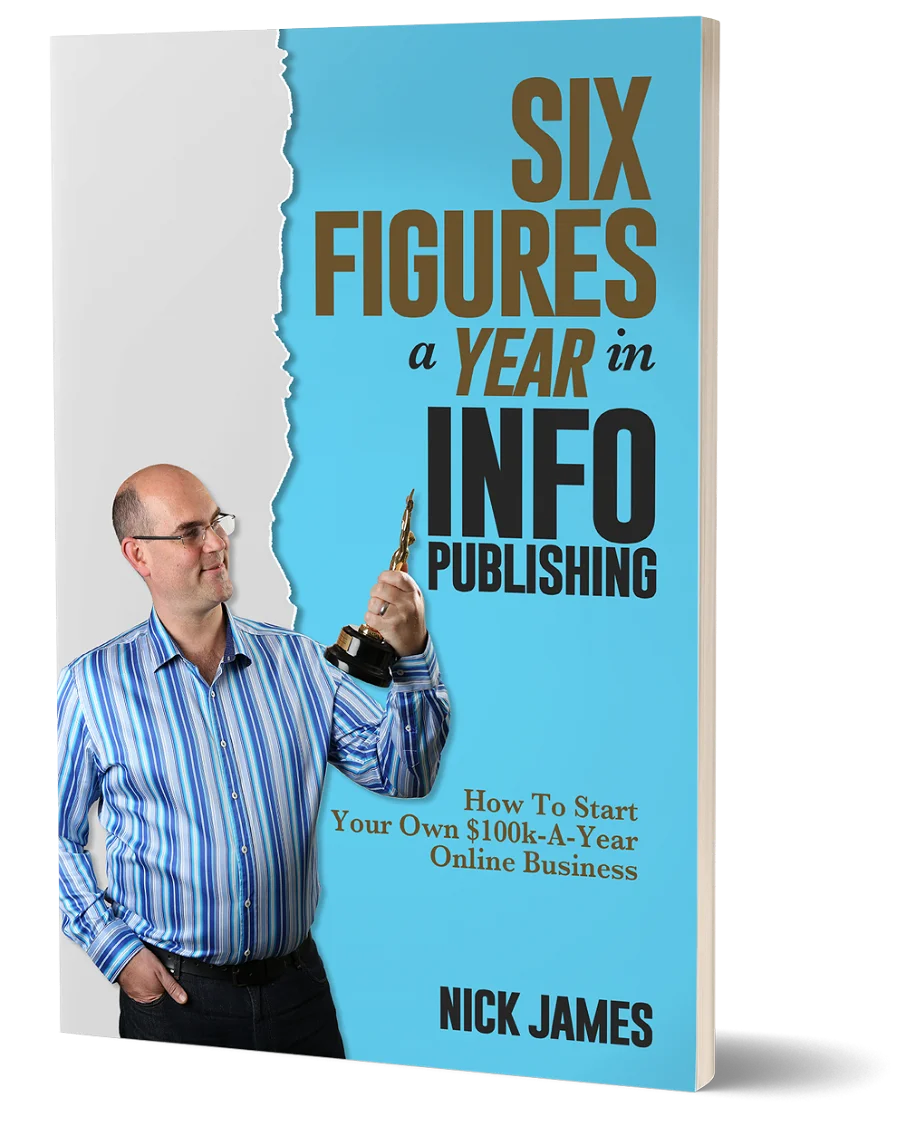
Author offers a FREE copy of this book to his next door neighbor... to prove he's not a drug dealer!
Now claim your FREE COPY.
and follow the step-by-step instructions for making the kind of money (and living the kind of lifestyle) that'll get your neighbors curtains twitching with curiosity!
Enter your details below to discover how to claim your FREE COPY of 'Six Figures A Year In Info Publishing' ...
Privacy Policy : We value your privacy. You can unsubscribe from receiving future emails with 1 click at any time.