How To Build A Simple Content System That Never Runs Dry
I’ve noticed something odd watching people get started in online business. They’ll write one good email or record one useful video, feel pleased with it, and then sit staring at a blank page the very next day wondering what on earth to make next. There’s no content system behind what they’re doing, just one idea followed by a scramble for the next one.
If you’re a beginner trying to build any kind of audience, this is worth stopping on. The same goes if you’re one of the strategy hoppers who keeps switching tactics because the last one felt like too much effort.
You don’t need a hundred fresh ideas. You need a handful of formats you can use again and again. It’s the same way I’d have reached for the same trusted tools on a hundred different windows, rather than inventing a new method for every single job.
Why Every Piece Of Content Feels Like Starting From Zero
Most beginners treat content the way I used to treat a one-off repair. Look at the problem fresh, work out a plan, do the job, then start completely from scratch on the next one.
That’s exhausting when you’re restoring a window. It’s even worse when you’re trying to publish something every week.
The blank page isn’t really about running out of ideas. It’s about never having built a repeatable shape for your content system in the first place, so every piece demands you invent the whole thing again.
The Fix Isn’t More Ideas, It’s Fewer Formats
Here’s the shift that actually helps. Instead of asking, what should I make today?, pick two or three formats you can reuse and simply ask, what’s today’s topic?
That might be a short teardown where you pick one thing and show how you’d improve it. It might be a “three mistakes” style piece, where next week is three mistakes about something else entirely. It might be a before-and-after, showing a problem, one fix, and the result.
Once you’ve got the format sorted, the topic is the only decision left, and that’s a far smaller thing to face than a blank page.
Early on, in this business, I found the expensive way to learn this lesson.
What The Solo Ads Actually Taught Me
When I started this business just over two years ago, I bought solo ads to build my list, hoping the traffic itself would do the work for me. Most of the people who signed up never even opened what I sent them, and I spent somewhere between $2,700 and $3,000 finding that out.
Looking back, buying traffic and hoping for the best was exactly the same mistake as sitting down to invent brand new content every single day. Both are trying to solve the problem from scratch, over and over, instead of building something repeatable that keeps working without you reinventing it each time.
That’s what pushed me to stop buying traffic and start creating my own products instead.
The lesson underneath it applies just as much to content as it did to that ad spend. Chasing a fresh tactic every time is expensive, whether it costs you money or just hours you’ll never get back. A format you can return to, week after week, is the thing that actually compounds.
Building Your Own Set Of Repeatable Formats
Sit down and choose two or three formats that suit your business and can generate dozens of topics without straining.
A beginner writing about online business might use three simple formats. A weekly teardown of one small business idea, a “three mistakes” piece that changes subject each time, or a quick myth-of-the-week that takes something commonly said in the market and explains what’s missing from it.
Take the teardown format as an example. Pick one landing page, one email, or one short video made by someone else in your niche, and spend five minutes pulling out what works and what doesn’t. Do that every Tuesday, and you’ve got a standing appointment with content rather than a fresh decision each week. The topic changes, the shape never does, and that’s exactly what makes it sustainable.
None of that requires you to be more creative. It requires you to pick the shape once, and then just feed a new topic into it.
Batch Your Topics, Not Your Pieces
The trick that makes this sustainable is brainstorming topics in batches rather than one piece at a time.
If “three mistakes” is one of your formats, sit for fifteen minutes and list ten versions of it. You’ve now got ten pieces of content without inventing ten separate concepts, and you’ve done it once rather than fifteen separate times under pressure.
Say you’re using three formats: a teardown, a “three mistakes” piece, and a quick myth-of-the-week. In one sitting, list ten teardown subjects, ten mistake themes, and ten myths worth busting. That’s thirty pieces of content sketched out before you’ve published a single one, and every future blank page turns into a five-minute job of picking the next line off the list rather than staring at nothing.
Do that for two or three formats and you can build a month’s worth of content in under an hour, which is a very different feeling to that blank page at the start of this.
Give Each Format Its Own Signature
Once you’re using a format repeatedly, give it a recognisable opening. The same phrase, the same setup, every single time.
I’ve written a bit more about small, repeatable habits like this in some of the recent updates I’ve shared, and the pattern holds everywhere I’ve looked. Familiarity is worth more than novelty, because your audience starts to recognise what’s coming before you’ve finished the first line.
Eventually, people know what they’re getting. That recognition is worth more than the version where every piece looks completely different to the last.
Let The Format Do The Heavy Lifting
Once you’ve run a format five or six times, compare which topics landed well and which didn’t. Don’t chase something completely new because one version didn’t perform. Try the same format with a sharper topic instead.
This is, if I’m honest, the part beginners skip most often. They treat a quiet result as proof the whole idea was wrong, when it was usually just the topic that missed, not the shape. A teardown on a boring product will always underperform a teardown on something people already care about, and that’s a topic problem, not a format problem.
Building something properly means fixing the actual problem rather than covering it up. If a format isn’t working, look at the topic before you throw out the format itself.
Where This Leaves You
You don’t need a hundred brilliant ideas to build an audience. You need two or three formats you’re willing to use a hundred times, with a fresh topic each time.
Pick one this week.
Write down ten topics for it before you publish a single one. Then use it, and only worry about the next format once this one is properly bedded in.
That’s a far steadier way to build a lasting content system than hoping the next idea arrives just in time.
Best wishes, Dean
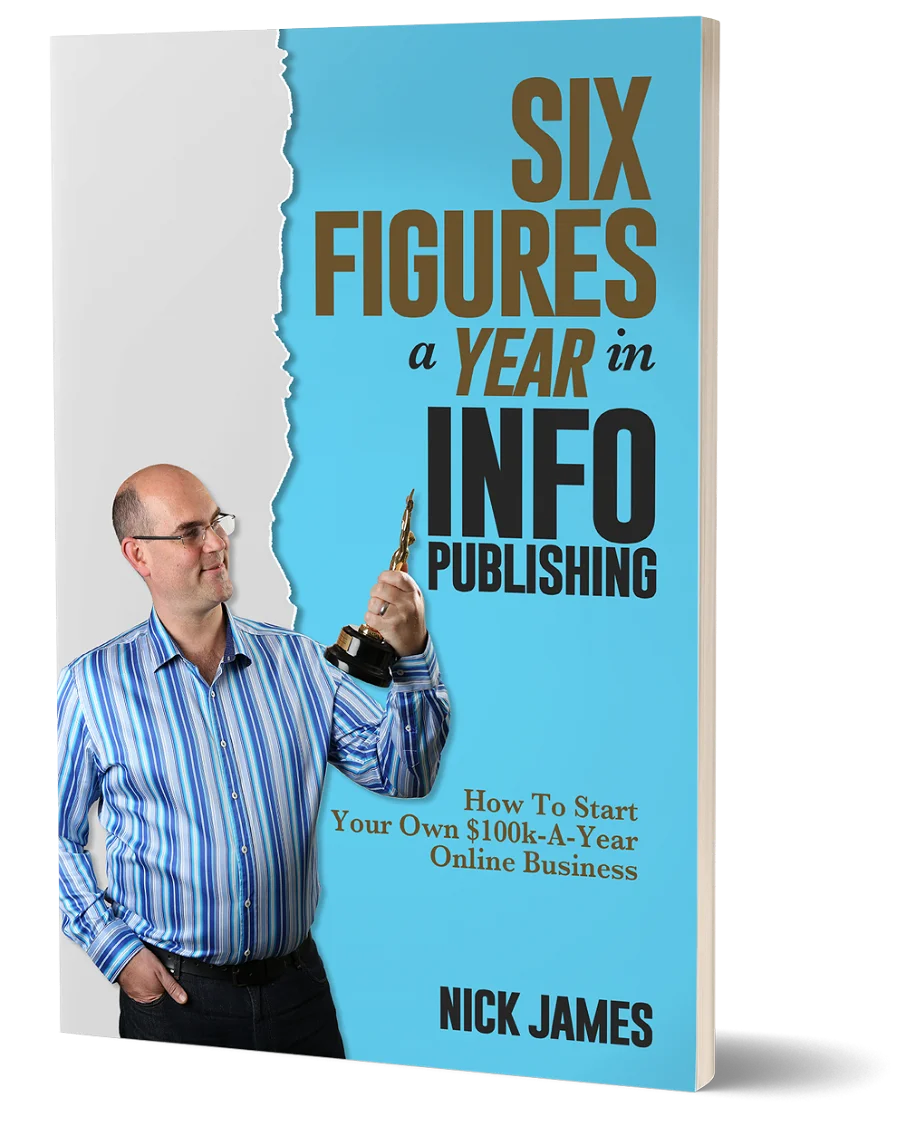
Author offers a FREE copy of this book to his next door neighbor... to prove he's not a drug dealer!
Now claim your FREE COPY.
and follow the step-by-step instructions for making the kind of money (and living the kind of lifestyle) that'll get your neighbors curtains twitching with curiosity!
Enter your details below to discover how to claim your FREE COPY of 'Six Figures A Year In Info Publishing' ...
Privacy Policy : We value your privacy. You can unsubscribe from receiving future emails with 1 click at any time.